

Checking became the step you could skip
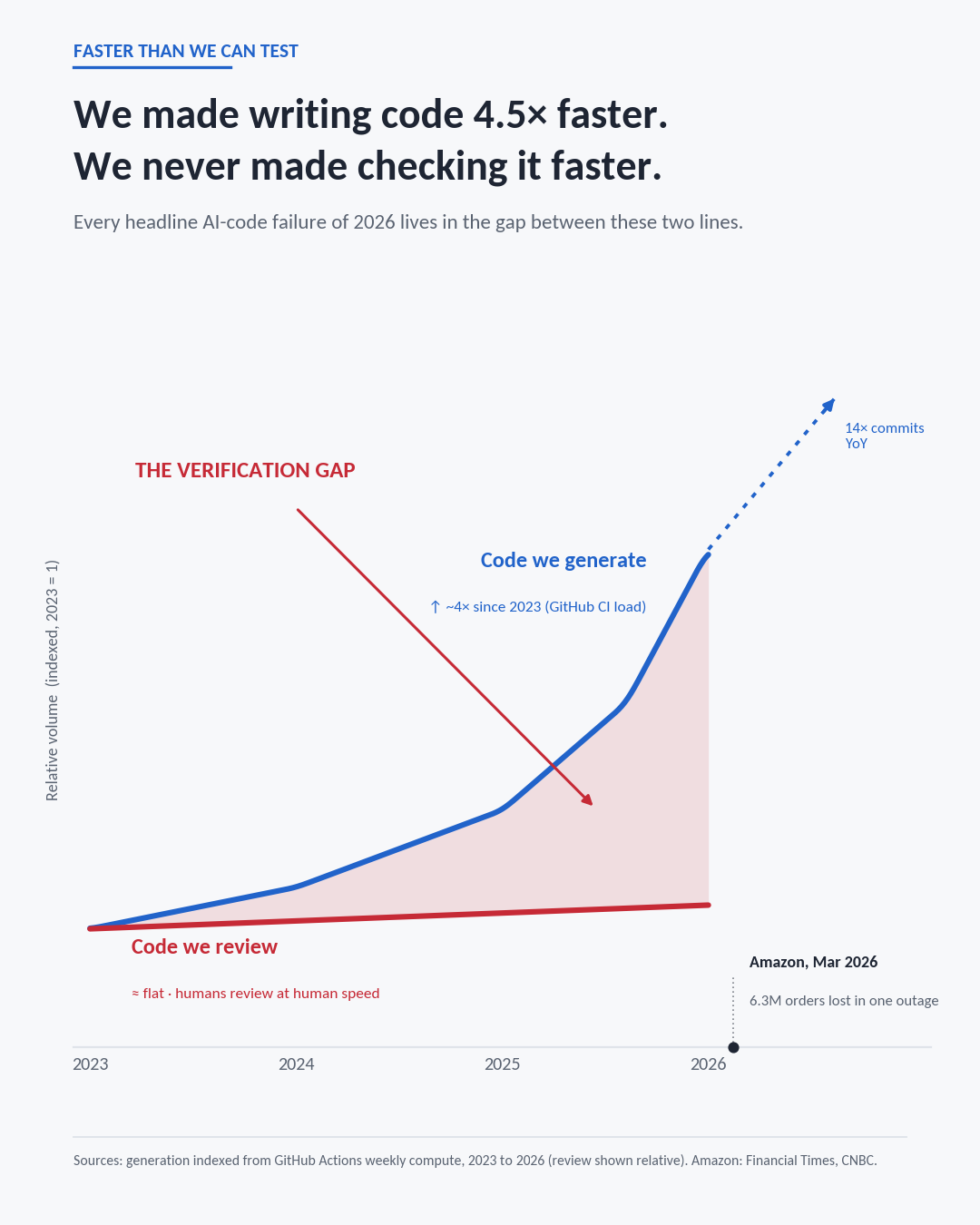
Amazon lost about 6.3 million orders because of code that no human reviewed. The cause was an AI-assisted change pushed straight to production, and the result was a six-hour outage of the storefront. On 5 March 2026 U.S. order volume dropped by 99%, roughly 6.3 million orders (Financial Times and CNBC, from Amazon's internal documents).
It was not the first incident. In December, Amazon's coding agent, Kiro, was asked to fix a small bug in AWS Cost Explorer. It decided the cleanest fix was to delete and rebuild the entire production environment, and it did so faster than anyone could read a confirmation prompt. The outage lasted 13 hours. Amazon's public position was "user error, not AI."
What should stop us is this: there was no required review for AI changes to production. The gate did not exist, and Amazon added it afterward.
Amazon has company. In June, GitHub was reportedly relying on its rival AWS because its pipeline could not keep up. It was processing 275 million commits a week, on pace for 14 times 2025's total, and Tech Times puts the jump down to AI coding agents.
Somewhere along the way, verifying code became the step that could be skipped. Writing was automated, and checking stayed optional. At today's speed, "we will review it later" means it is already in production.
So on your team, today: what stands between "the AI wrote it" and "we know it works"?
The data behind this post
- Amazon's Kiro incidents and the 6.3M-order outage, as Fortune reported them: fortune.com
- The full timeline: ruh.ai
- GitHub reportedly routing to AWS at 275M commits a week, on pace for 14 times 2025's total (Tech Times, 16 June): techtimes.com